September 18, 2026
Beasts at Ephesus
1 Corinthians 15:32 and Acts 19
“If after the manner of men I have fought with beasts at Ephesus, what advantage it me, if the dead rise not? Let us eat and drink; for to morrow we die.”— 1 Corinthians 15:32
In 1 Corinthians 15, the Apostle Paul is speaking about the resurrection. He is establishing the truth that Christ was raised from the dead and that, because He lives, those who belong to Him have the hope of resurrection as well. Paul makes his point by asking a powerful question: If there is no resurrection, then why have I risked my life day after day for the sake of the Gospel?
Paul points to one particular circumstance (Acts 19) that illustrates the severe physical toll and constant threat of death he faced: “If after the manner of men I have fought with beasts at Ephesus.” Whatever the precise nature of this encounter, Paul uses it to emphasize the reality of the danger he endured for the sake of Christ. His life was not one of comfort or self-preservation. He continually placed himself in harm’s way because he believed the Gospel was worth giving his life for.
Paul did not count his own life dear unto himself. Instead, he offered it to God as a sweet-smelling savour, in obedience to the call the Lord had placed upon his life. There is something beautiful about a life given wholly to God—a life poured out without reservation, surrendered completely to His purposes. It is a fragrance that rises before Him.
We see this same picture in the offering of Christ. The burnt offering was wholly consumed upon the altar. Nothing was held back. In a similar way, the Apostle Paul identified himself with Christ in His sufferings, willingly becoming an offering through the giving of his own life and strength for the sake of the Gospel.
Paul’s preaching of the Word of God was fruitful. Many people believed, and their lives began to change. In Ephesus, those who had practiced curious arts brought their books together and burned them publicly. The value of those books was enormous—fifty thousand pieces of silver. What a testimony to the transforming power of the Word of God! Things that had once held great value in the eyes of these people were now willingly discarded because they had encountered the truth.
“And so mightily grew the word of God and prevailed.”
But whenever the truth of God begins to take hold, there are often those who are affected by the change. John 3:19, “men loved darkness rather than light, because their deeds were evil. The growth of the Gospel created hardship for those who made their living from the practices Paul was preaching against. A great stir arose in Ephesus as those whose livelihood was connected to the worship of Diana and the making of silver shrines became increasingly concerned.
Demetrius, a silversmith, gathered the craftsmen together. Their concern was not merely financial. They feared that the preaching of Paul would cause the temple of the great goddess Diana to be despised and that her magnificence would be destroyed—she whom, as they declared, all Asia and the world worshipped.
These men were filled with wrath, and the entire city became filled with confusion. The uproar grew so great that the people rushed together into the theatre. Yet in the midst of all this confusion, the town clerk eventually quieted the assembly and dismissed them.
What stands out is what Paul did afterward. He continued on.
The opposition did not change his calling. The uproar did not silence his testimony. The threats did not cause him to turn aside from the work God had given him. Paul continued preaching and teaching the Word of God.
This brings us back to his words in 1 Corinthians 15. “If the dead rise not,” Paul says, then what advantage is there in all of this? Why endure the suffering? Why risk his life? Why continue preaching when the message brings opposition, persecution, and danger?
His answer is found in the resurrection.
Paul's life made sense because eternity was real. The suffering of this present life could be endured because Christ had conquered death. His life could be poured out because he knew that death was not the end.
Paul was willing to be spent for Christ because he knew the One for whom he was spending his life.
There is a challenge for us in the example of Paul. What does it mean for us to offer our lives wholly to God? What things are we willing to lay upon the altar? What would we continue doing if we knew that the resurrection was absolutely certain—and what would we stop doing if we believed this life was all there is?
Paul lived as a man who believed the resurrection.
He preached as a man who believed the resurrection.
He suffered as a man who believed the resurrection.
And even when the beasts were at Ephesus, Paul continued to count Christ worth the cost.

July 30, 2026
23rd Psalm - He Maketh Me To Lie Down In Green Pastures
The thought I have been considering is from the 23rd Psalm, a passage that is familiar and comforting to so many.
"The Lord is my shepherd; I shall not want. He maketh me to lie down in green pastures: he leadeth me beside the still waters. He restoreth my soul: he leadeth me in the paths of righteousness for his name’s sake. Yea, though I walk through the valley of the shadow of death, I will fear no evil: for thou aret with me; thy rod and thy staff they comfort me. Thou preparedst a table before me in the presence of mine enemies: thou anointest my head with oil; my cup runneth over. Surely goodness and mercy shall follow me all the days of my life: and I will dwell in the house of the Lord forever."
This psalm was written by David, who knew firsthand what it meant to be a shepherd. He spent his early years caring for sheep, guiding them, protecting them, and making sure they had everything they needed. Because of that experience, David understood something very important—he, too, had a Shepherd. The Lord was the One who faithfully cared for him and provided for every need.
When David wrote that the Lord "makes me lie down in green pastures," we often picture wide, lush fields covered with thick green grass. But Bible historian Ray Vander Laan explains that the hills surrounding Jerusalem are actually rocky and dry. The "green pastures" David described were often little more than small sprigs of grass growing between the rocks. Nighttime moisture collecting on the stones, along with the seasonal rains, provided just enough nourishment for those tiny patches to grow. A good shepherd would patiently lead his sheep from one small patch to another until each sheep had received enough to eat. It wasn't an overflowing feast, but it was enough for that day.
Life is often much the same. We imagine smooth paths and abundant pastures, yet we often find ourselves walking through rocky places. Even so, our Shepherd never abandons us. He faithfully provides what we need for each day.
Today, we may need comfort. Tomorrow, we may need strength, wisdom, or peace. Whatever the need, our Shepherd promises to lead us one step at a time, providing just enough grace for today and just enough for tomorrow.
That is the hope of Psalm 23. Even as we walk through the valley of the shadow of death, we do not walk alone. The Lord is with us. He comforts us, He guides us, and He reminds us that His goodness and mercy continue to follow His children all the days of their lives. And for those who trust in Him, there is the wonderful promise that one day we will dwell in the house of the Lord forever.

July 23, 2026
Jonah Remembered: "I Remembered the Lord"
By Debra Isenbletter - Used By Permission - Adapted For Blog Post
I am continuing my personal study in the book of Jonah. I have been reading through Sister Debra's notes and enjoyed this portion. I trusted you will be blessed too - Brother Greg.
One of the turning points in Jonah's prayer comes with these simple yet powerful words: "I remembered the Lord." (Jonah 2:7). This is Jonah's recollection, and it marks the beginning of his return to hope. Remembering is often the first step to victory over despair. The biblical idea of remembering means "to be mindful of" or "to recall." It also carries the idea of being caused to remember. Trials have a way of reminding us of what truly matters, and the Holy Spirit faithfully brings God's truth back to our minds. To remember is also "to keep in remembrance," and this is one of the keys to overcoming life's darkest moments.
We remember the Lord by remembering His Word. Reading the Scriptures refreshes our minds with God's promises. Meditating on the Word allows those truths to sink deeply into our hearts, while studying the Word equips us with a richer understanding of God's character and His ways. Each of these disciplines requires a different investment of time and effort, but they all produce the same result—a storehouse of truth from which we can draw in our time of need. God's Word is always available to us, waiting for us to partake of it, treasure it, and store it up for future use.
When Jonah remembered, he remembered the Lord. He recalled that God had made promises to him and had established a relationship with him. Jonah was God's prophet and God's servant. In his rebellion and distress, he had forgotten these realities, but now he remembered. Along with remembering his own relationship with God, Jonah likely recalled the testimonies of other faithful believers who had experienced God's faithfulness in times of trouble. He remembered that "God is our refuge and strength, a very present help in trouble" (Psalm 46:1). He remembered that others whose souls had been cast down found comfort and renewed hope when they remembered God (Psalm 42:6).
Jeremiah provides another beautiful example of the power of remembering in Lamentations chapter 3. Jeremiah remembered both the painful and the hopeful realities of his life. He remembered his affliction and his misery (Lamentations 3:19). He remembered and was humbled (3:20). Then he deliberately turned his thoughts toward hope: "This I recall to my mind, therefore have I hope" (3:21). His hope rested in the Lord's steadfast mercy, which never failed (3:22), and ultimately in the great faithfulness of God, whose mercies are new every morning (3:23). Jeremiah remembered, and instead of being overcome by his circumstances, he overcame through faith.
This is what each of us must learn to do. By faith, we acknowledge the reality of the trial, but we also remember the reality of the Lord. We do not ignore our suffering, nor do we allow it to become our only focus. We see both, and we discover that the Lord makes the burden bearable until He brings us through it. Jonah waited for God's deliverance, and often we must wait as well.
The Apostle Paul reminds us that, through Christ, "we are more than conquerors through Him who loved us" and that nothing can separate us from the love of God in Christ Jesus (Romans 8:37–39). Like Jonah, we have a choice about what we will remember. We can dwell only on our circumstances, or we can deliberately remember the Lord—His promises, His presence, His mercy, and His faithfulness. Jonah remembered.
Jesus, enduring the cross, trusted His Father and looked beyond the suffering to the joy set before Him. We are called to do the same. We remember the Lord, we wait for His deliverance, and we trust that His faithfulness will carry us through every trial.

July 3, 2026
Serving the Lord Acceptably
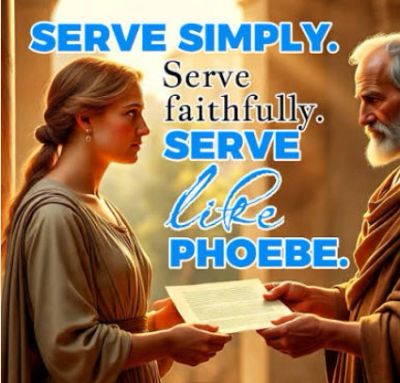
"I commend unto you Phebe our sister, which is a servant of the church which is at Cenchrea: That ye receive her in the Lord, as becometh saints, and that ye assist her in whatsoever business she hath need of you: for she hath been a succourer of many, and of myself also." — Romans 16:1–2
These verses have always held a special place in my heart. As our assembly recently studied the sixteenth chapter of Romans, the Holy Spirit brought them back to my remembrance along with many precious memories of the spiritual foundation the Lord gave me in my early Christian life.
I was blessed to be raised spiritually in the assembly in Wichita, where the teaching of the Word of God rightly divided abounded. The Lord surrounded me with godly pastors and faithful men and women who not only taught the Scriptures but also demonstrated what it meant to live for Christ. They prayed for me, encouraged me, corrected me, and invested their lives in mine. Looking back, I realize how greatly the Lord used their examples to shape my own life and ministry.
As I have reflected on Romans 16, one aspect stands out that is often overlooked. We frequently focus on the great doctrines of Scripture, and rightly so, but there is also the practical side of Christian service. God not only teaches us what to believe; He teaches us how to serve Him—and how to serve Him acceptably.
My pastors in Wichita began giving me opportunities to serve at an early age. My very first responsibility was simple: before each service, I was to fill a cup of water and place it on the pulpit. I can still remember hurrying into church, taking the green glass from the pulpit, running downstairs to the basement where the only water fountain was located, filling the glass, and rushing back upstairs to have it in place before the service began. Later came the responsibility of mowing the church lawn each week. These may have seemed like small tasks, but they were tremendous opportunities. Through them, I learned that every act of service for the Lord matters. Those early responsibilities helped form the attitude toward serving Christ that remains with me today.
When I later came to Bible school, the Lord placed me in the home of a pastor and his wife. Living with them gave me a unique opportunity to observe the ministry from behind the scenes. Not long after moving in, the Lord impressed upon my heart the words of Romans 16:2: "whatsoever business she hath need of you." Those words became a guiding principle for my life.
Sometimes serving meant driving the pastor to the hospital so he could visit someone who was sick. Other times it meant laying tile in the men's restroom or helping with maintenance around the church. Over the years, I participated in many different kinds of work. While I certainly learned practical skills, the greatest lesson was not how to complete a project. It was watching the joy with which they labored—not only in preaching the gospel, but also in faithfully caring for every detail that helped the gospel go forth. They understood that every task, whether public or unseen, was service unto the Lord.
One particular lesson has remained with me through the years. During a men's workday at the church, someone suggested a temporary shortcut to complete a project. The pastor simply asked, "Would you do that at your own house?" The man paused, somewhat surprised. The pastor then said, "If we wouldn't do it that way at our own house, why would we do it that way at the house of the Lord?"
Those words have echoed in my heart ever since. Every time we begin a project at church, I hear them again. We would never want to cut corners with the gospel itself, so why should we cut corners in our service to the Lord? The same spirit of excellence and faithfulness that should characterize our preaching ought to characterize everything we do for Christ.
Occasionally someone tells me that I am too particular or too picky. If striving to do my very best for the Lord earns me that reputation, I gladly accept it. My desire is simply to serve Him acceptably in whatever He places before me.
Consider the examples that God has given us. The Lord Jesus Christ held nothing back in serving His Father. He gave Himself completely. The Apostle Paul likewise withheld nothing from those to whom he ministered. He declared, "I have not shunned to declare unto you all the counsel of God" (Acts 20:27). Paul poured out his entire life in the service of Christ, which is why he could later testify, "I have fought a good fight, I have finished my course, I have kept the faith" (2 Timothy 4:7).
What a blessing it is when we give ourselves wholeheartedly to the Lord's work. Whether our service is seen by many or known only to God, every act of faithful obedience is precious in His sight.
As our study in the Book of Romans came to a close, we saw Paul took time to commend the many faithful helpers of the gospel. Some preached, some traveled, some opened their homes, some encouraged, and some simply met whatever need arose. Their names are forever recorded in Scripture because their service mattered to God.
The same is true today. God has placed each of us in the Body of Christ exactly where it has pleased Him. Each member has a purpose, each has a place to serve, and every opportunity to minister is significant.
May we, like the many faithful saints Paul exhorted and commended, be willing to serve "in whatsoever business" the Lord places before us. And may we do so with joy, faithfulness, and a desire to serve Him acceptably until He comes.
June 17, 2026
Conquering the "Ites" in Our Lives
Before Israel entered the Promised Land, God warned Moses about seven specific nations that stood in the land they were about to possess. These nations—the Hittites, Girgashites, Amorites, Canaanites, Perizzites, Hivites, and Jebusites—would become obstacles that Israel would need to overcome. For the purpose of this lesson, we will simply refer to them as the “ites.”
In Deuteronomy 7, the Lord told Israel that when He brought them into the land, He would cast out these seven nations, even though they were greater and mightier than Israel. God commanded His people to utterly destroy them, make no covenant with them, show them no mercy, and avoid intermarrying with them. The reason was clear: these nations would turn Israel away from following the Lord. Their altars, images, groves, and idols were to be destroyed because God desired a holy people separated unto Himself.
The Lord reminded Israel that they were not chosen because of their strength, size, or ability. In fact, they were the fewest among the nations. God chose them because He loved them and because He was faithful to the covenant He had made with their fathers. He had redeemed them from Egyptian bondage with a mighty hand, and He would continue to be faithful to those who loved Him and kept His commandments.
A similar promise is found in Exodus 23:20-24. God promised to send His Angel before Israel to lead them into the place He had prepared. If they would obey His voice, God would become an enemy to their enemies and would cut off the nations that stood before them. Once again, they were instructed not to bow down to the gods of these nations or imitate their practices, but rather to completely overthrow their idols and images.
In Deuteronomy 20, God provided additional instructions concerning warfare. Israel was told not to fear when they faced armies larger and stronger than themselves. They were not to be intimidated by horses, chariots, or great numbers because the Lord who delivered them from Egypt would fight for them. God would go before them, save them, and give them victory. The chapter emphasizes that when confronting these enemies, nothing was to be left that would continue to influence or corrupt God's people. The reason was simple: God did not want Israel learning the abominations and sinful practices of the surrounding nations.
There are several practical lessons we can draw from this Old Testament picture. First, God had given Israel a land to possess. Likewise, God has given believers a position in Christ. Ephesians 2 tells us that we are seated together in heavenly places in Christ Jesus. Yet Ephesians 6 reminds us that there is a spiritual battle involved in entering into and enjoying all that God has provided for us.
There is also a personal application. God gives each of us places of service and responsibility. Years ago, God called me to pastor an assembly. Along the way, there have been many "ites" that stood in the path—opposition from family, friends, circumstances, and even fellow believers. Yet I can testify with Paul, "out of them all the Lord delivered me" (2 Timothy 3:11). Even today, I continue to trust the promise of 2 Corinthians 1:10, that the God who has delivered will yet deliver.
The inhabitants of the land had to be removed. While this may sound harsh at first, the spiritual lesson is important. The flesh cannot be allowed to remain in control. It must be dealt with according to God's instructions. We see this principle illustrated in circumcision, which symbolized the cutting away of the flesh. God knew that if Israel tolerated the practices of these nations, corruption would eventually follow. In the same way, we cannot make peace with the works of the flesh. They must either be brought into submission or cut off entirely.
God's concern was not merely military victory but spiritual protection. He desired to protect His people from corruption. My heart likewise yearns for God's people to be protected from the corruption that exists in this world, both physically and spiritually. The influences around us constantly seek to pull us away from wholehearted devotion to Christ.
Another important lesson is that these nations were stronger than Israel. The challenges standing before us today are often greater than our own strength and ability. The "ites" we face—temptations, fears, trials, weaknesses, and spiritual battles—cannot be overcome through human effort. We cannot deliver ourselves. Victory does not come through determination, talent, or personal strength.
So how do we gain victory over the "ites" in our lives?
The answer is found in the Lord Jesus Christ. Our victory is based upon the victory He won at Calvary. Through faith, we identify with His death, burial, and resurrection. We recognize that our old man was crucified with Him and that we have been raised to walk in newness of life. Furthermore, those who have been filled with the Holy Spirit have been given divine power to overcome. As we yield ourselves to the Spirit, He enables us to overcome the flesh. The Spirit accomplishes what we could never accomplish on our own.
Just as Israel was called to be a special people, so the church today is God's called-out people. The Greek word ekklesia means "called-out ones." God did not call us because we were strong, capable, or self-sufficient. Like Israel, we were incapable of overcoming our enemies apart from divine intervention. We were the weak, the needy, and the dependent.
Why, then, did God choose us? The answer is wonderfully simple: He loved us. He loved you, and He loved me. He also acts according to His Word and His promises. Just as He remained faithful to His covenant with Israel, He remains faithful to every promise He has made to His children.
As we face the "ites" in our own lives, let us remember that God has called us, loved us, redeemed us, and equipped us for victory. The battle may be greater than we are, but it is not greater than our God. Therefore, let us walk forward in faith, knowing that the One who has delivered in the past is still delivering today and will continue to deliver in the days ahead. Above all, let us remember this great truth: the Lord our God is faithful.

June 11, 2026
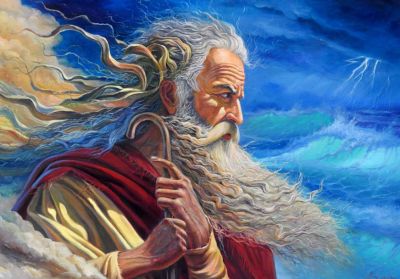
Moses: A Foreshadowing of Jesus Christ
We are first introduced to Moses in the second chapter of Exodus. His name means "drawn forth" or "taken out of the water." Exodus 2:10 records, "...and she called his name Moses: and she said, Because I drew him out of the water." From the very beginning of his life, Moses was set apart by God for a special purpose.
As we study the life of Moses, we discover numerous parallels between him and the Lord Jesus Christ. Moses is often viewed as a type of Christ—a prophetic foreshadowing of the Savior who would come. Throughout the Old Testament, God masterfully points forward to Jesus Christ, who fulfills prophecy and stands as the ultimate Deliverer, Prophet, and Mediator between God and humanity.
One of the earliest parallels is found in their infancy. Moses was born during a time when Pharaoh commanded that all Hebrew male children be killed at birth (Exodus 1). To preserve his life, his parents hid him until he could no longer be concealed. Likewise, when Jesus was born, King Herod sought to destroy Him. Warned by an angel, Joseph fled with Mary and the young Christ child into Egypt until the danger had passed (Matthew 2:13-15). In both cases, earthly rulers attempted to destroy God's chosen deliverer.
Another similarity is seen in their experiences with temptation. Hebrews 11:24-26 tells us that Moses rejected the privileges and pleasures of Pharaoh's palace, choosing instead to identify with God's people and suffer affliction rather than enjoy the fleeting pleasures of sin. Jesus likewise faced temptation directly when He was led by the Spirit into the wilderness to be tempted by the devil (Matthew 4:1). Both demonstrated unwavering obedience to God despite opportunities to choose an easier path.
Moses and Jesus also shared a remarkable period of fasting. Exodus 34:28 records that Moses spent forty days and forty nights with the Lord without eating bread or drinking water while receiving the Law. Similarly, Jesus fasted for forty days and forty nights in the wilderness before beginning His public ministry (Matthew 4:2). These forty-day periods marked significant moments of preparation and communion with God.
The lives of Moses and Jesus also intersect in their encounters with the sea. In Exodus 14:21, Moses stretched out his hand over the Red Sea, and God miraculously divided the waters, allowing Israel to cross on dry ground. In Matthew 8:26, Jesus demonstrated His divine authority by rebuking the wind and the sea, bringing an immediate calm to a raging storm. Both revealed God's power over the waters, though Jesus demonstrated authority as the very Son of God.
God used both Moses and Jesus to provide food for multitudes. During Israel's wilderness journey, God supplied manna from heaven to sustain His people (Exodus 16). Centuries later, Jesus miraculously fed more than five thousand people with a few loaves and fishes, leaving twelve baskets of leftovers after everyone had eaten and was filled (Matthew 14:20-21). These miracles point to God's abundant provision and ultimately to Christ as the Bread of Life.
Both men also endured constant criticism and complaints from those they served. Moses repeatedly faced the murmurings of the children of Israel. Exodus 15:24 records one of many examples: "And the people murmured against Moses, saying, What shall we drink?" Jesus likewise faced continual criticism from religious leaders who found fault with Him and His disciples (Mark 7:2). Despite opposition, both faithfully continued the work God had given them to do.
Neither Moses nor Jesus received much honor from those closest to them. Moses was criticized by his own brother and sister, Aaron and Miriam, because of his marriage (Numbers 12:1). Jesus experienced similar rejection, as John 7:5 states, "For neither did his brethren believe in him." Both understood the pain of being misunderstood and rejected by family members.
Perhaps one of the greatest parallels between Moses and Christ is their role as intercessors. Throughout the Exodus account, Moses repeatedly cried out to God on behalf of the people. When Israel complained, rebelled, or faced hardship, Moses continually sought God's mercy and intervention. When the people murmured at the Red Sea, Moses cried unto the Lord. When they thirsted in the wilderness, Moses cried unto the Lord. When Miriam was struck with leprosy, Moses prayed, "Heal her now, O God, I beseech thee." Even when the nation rebelled and sought to return to Egypt, Moses and Aaron fell on their faces before God on behalf of the congregation.
An intercessor is one who intervenes, pleads, or acts as a mediator on behalf of another. Moses faithfully fulfilled this role for Israel, but he ultimately points us to a greater Intercessor—the Lord Jesus Christ.
Jesus Christ accomplished what no earthly mediator could ever achieve. Through His death, burial, and resurrection, He paid the penalty for sin. By faith in Him, we experience forgiveness, newness of life, and a right standing before God. Through Christ, believers are granted access into the very presence of God. As Jesus declared in John 14:6, "No man cometh unto the Father, but by me."
Unlike Moses, whose ministry eventually ended, Jesus lives forever and continues His ministry of intercession today. Hebrews 7:25 declares, "Wherefore he is able also to save them to the uttermost that come unto God by him, seeing he ever liveth to make intercession for them." Likewise, 1 John 2:1 reminds believers, "If any man sin, we have an advocate with the Father, Jesus Christ the righteous."
The Greek word translated "advocate" is parakletos, meaning one called alongside to help, an intercessor, counselor, or advocate who pleads another's cause. This same word is also used in reference to the Holy Spirit, who comforts, guides, strengthens, and assists believers in their walk with God.
As remarkable as Moses was, his life ultimately points beyond himself to Jesus Christ. Moses delivered Israel from Egyptian bondage; Jesus delivers mankind from the bondage of sin. Moses mediated the Old Covenant; Jesus established the New Covenant through His blood. Moses interceded for a nation; Jesus intercedes for all who come to God through faith in Him. The more we study Moses, the more clearly we see the greatness of the One whom Moses foreshadowed—the Lord Jesus Christ.
June 4, 2026
When I Am Weak Then Am I Strong
One passage of Scripture that has continually encouraged me in recent days is found in 2 Corinthians 12:9–10, “And he said unto me, My grace is sufficient for thee: for my strength is made perfect in weakness. Most gladly therefore will I rather glory in my infirmities, that the power of Christ may rest upon me. Therefore I take pleasure in infirmities, in reproaches, in necessities, in persecutions, in distresses for Christ’s sake: for when I am weak, then am I strong.”
Lately, I have been challenged with new experiences in my life—situations that have required wisdom and understanding beyond what I have known before. During these times, these verses from 2 Corinthians have repeatedly come to my heart through the working of the Holy Spirit. They have reminded me that God’s grace truly is enough for every burden, every uncertainty, and every trial.
In this passage, the Apostle Paul was speaking about a “thorn in the flesh.” We are not told exactly what this thorn was, but it was something difficult that Paul continually battled. Three times he asked the Lord to remove it, yet the Lord’s answer was not the removal of the burden but the promise of sustaining grace: “My grace is sufficient for thee: for my strength is made perfect in weakness.” These words became Paul’s testimony of the Lord’s faithfulness in the midst of suffering.
The truth of this promise was also beautifully expressed in the hymn “My Grace is Sufficient,” written by Ira Reed:
“My grace is sufficient for thee,”
O blessed the word of our Lord;
Whatever thy trials shall be,
“Remember, remember My word.”
“My grace is sufficient for thee,”
O take the sweet words to thy heart;
This thought shall thy gladness e’er be,
’Twill strength for life’s battle impart.
“My grace is sufficient for thee,”
Tho’ sorrow and evil distress,
And strong thy temptations may be,
This promise thy soul shall caress.
Chorus:
My grace is sufficient for thee;
My grace is sufficient for thee;
Whatever thy burden or care,
“My grace is sufficient for thee.”
These words do not apply only to the thorn Paul endured, but to the many struggles we all face throughout life. God’s Word remains true in every circumstance: His grace is sufficient.
Paul also makes another powerful statement in this passage: “For when I am weak, then am I strong.” That verse reminds me of something from my school days. Every year in physical education class we were required to take the Presidential Fitness Test. Here is a little history about the test - established in 1956 under President Dwight D. Eisenhower, the test measured strength, endurance, and agility through exercises like pull-ups, shuttle runs, and running events.
Year after year, I remember hanging from the pull-up bar, unable to pull myself up even once. While others laughed, I simply waited for the teacher to tell me to come down. I lacked the strength to do what was required of me. Looking back now, I realize how much that experience reflects life itself. Many times we encounter burdens, trials, and responsibilities that we simply do not have the strength to overcome on our own.
Paul faced many situations in his life that he could not “pull himself up” from either. Yet through his relationship with the Lord Jesus Christ, he discovered a new source of strength and power. Before knowing Christ, Paul was strong in his own abilities, accomplishments, and religion. But after coming to Christ, he realized that true strength was no longer found in himself, but in the Savior living within him.
By the leading of the Holy Spirit, Paul wrote these words in Galatians 2:20 “I am crucified with Christ: nevertheless I live; yet not I, but Christ liveth in me: and the life which I now live in the flesh I live by the faith of the Son of God, who loved me, and gave himself for me.”
What a powerful truth. Christ living within us brings a strength we could never produce ourselves. Through the working of the Holy Spirit, we are no longer left hanging helplessly on the “pull-up bars” of life. Instead, we can say with confidence, as Paul wrote in Philippians 4:13, “I can do all things through Christ which strengtheneth me.”
Paul closes this passage, 2 Corinthians 12:9, 10 with these remarkable words, “Therefore I take pleasure in infirmities, in reproaches, in necessities, in persecutions, in distresses for Christ’s sake: for when I am weak, then am I strong.”
May we always remember that our weakness is not the end of the story. It is often the very place where God reveals His greatest strength through us.

May 22, 2026
Which Way Is God Leading?
“And it came to pass, when Pharaoh had let the people go, that God led them not through the way of the land of the Philistines, although that was near; for God said, ‘Lest peradventure the people repent when they see war, and they return to Egypt.’ But God led the people about, through the way of the wilderness of the Red Sea: and the children of Israel went up harnessed out of the land of Egypt” (Exodus 13:17–18).
There are moments in life when we arrive at a crossroads—a place where important decisions must be made that will shape our future, whether in our careers, relationships, or spiritual walk. In these pivotal times, Scripture teaches us not to rely on our own understanding but to seek God’s direction. Proverbs 3:5–6 reminds us, “Trust in the Lord with all thine heart; and lean not unto thine own understanding. In all thy ways acknowledge Him, and He shall direct thy paths.” The children of Israel experienced such a crossroads. In Numbers 20:14–22, Moses sent messengers to the king of Edom, requesting passage through his land—a shorter and easier route—but permission was denied. Instead, they were led the longer way around by the Red Sea. Frustrated, the people spoke against God and Moses, questioning why they had been brought out of Egypt only to face hardship in the wilderness.
This account teaches us the importance of following the leading of the Spirit, even when it doesn’t make sense to us. God’s direction may not always align with human logic or what appears easiest, but His way leads to His best for our lives. Often, the flesh urges us toward the path that seems simpler or more convenient, tempting us to rely on our own strength and leave God out of the equation. Yet Scripture reminds us that the flesh and the Spirit are in conflict. No matter our age or how long we have walked with the Lord, this struggle remains. If we walk according to the flesh, we become consumed with temporary, carnal things. But as Paul instructs in Galatians 5:16, “Walk in the Spirit, and ye shall not fulfill the lust of the flesh.” Choosing to follow the Spirit—even when the path is longer or harder—keeps us aligned with God’s purpose and leads us exactly where He intends for us to be.

May 9, 2026
Debtor - Romans 1:14
In Epistle to the Romans 1:14, the apostle Paul the Apostle declares, “I am debtor both to the Greeks, and to the Barbarians; both to the wise, and to the unwise.” The word “debtor” carries the idea of being under obligation—bound to a duty that cannot be ignored. For Paul, this was not a casual responsibility but a divine calling that shaped the entire course of his life.
His testimony begins dramatically in Acts of the Apostles 9, where Saul, determined to extinguish the growing Christian movement, is confronted by the Lord on the road to Damascus. Though he had resisted the inner conviction, he finally surrendered with the question, “Lord, what wilt thou have me to do?” Blinded and led into the city, he encountered Ananias, who, in obedience to God, laid hands on him so he might receive his sight and be filled with the Holy Spirit. In that moment, the scales—both physical and spiritual—fell away, and Saul began proclaiming his first message: that Christ is the Son of God. From then on, he was a chosen vessel, called to bear God’s name before Gentiles, kings, and the children of Israel.
Paul recounts this calling again in Acts of the Apostles 22 and 26, emphasizing his background as a devout Jew trained under esteemed teachers, his zeal in persecuting believers, and his ultimate surrender to God’s will. He understood himself as chosen to be a witness to all people, sent to open their eyes, turn them from darkness to light, and lead them from the power of Satan to God so they might receive forgiveness and an inheritance through faith. This sense of obligation was so strong that he later wrote in First Epistle to the Corinthians 9:16, “Woe is unto me, if I preach not the gospel!” Preaching was not a matter of personal ambition but a necessity laid upon him by God.
In Epistle to the Galatians, Paul reflects that he was set apart from birth and called by grace to reveal Christ to the Gentiles, entrusted specifically with the gospel to the uncircumcised. Likewise, in Epistle to the Ephesians 3, he describes himself as a minister made by God’s grace, commissioned to preach the unsearchable riches of Christ and to reveal the mystery of fellowship to all people. His life illustrates what it means to live as one who is truly “in debt” to God’s calling.
This sense of divine obligation is echoed in the experiences of other biblical figures. The prophet Jeremiah described God’s word as “a burning fire shut up in my bones,” something he could not contain even when he faced mockery and rejection. Similarly, Amos declared that when the Lord speaks, there is no choice but to prophesy. The apostles Peter the Apostle and John the Apostle expressed the same compulsion in Acts 4:20: “We cannot but speak the things which we have seen and heard.”
Not everyone responded faithfully to this obligation. Jonah famously tried to flee from his calling, only to be turned back by extraordinary circumstances. Demas, on the other hand, forsook the path altogether, loving the present world more than the work he had once shared. Even Jesus warned of divided commitment in Gospel of Luke 9:61–62, teaching that no one who puts a hand to the plow and looks back is fit for the kingdom of God.
Taken together, these accounts paint a clear picture: to be a “debtor” in the biblical sense is to live with an unshakable awareness of God’s call—a responsibility that presses inwardly and compels outward action. Whether embraced like Paul, resisted like Jonah, or abandoned like Demas, the obligation remains a defining reality for those who encounter the truth.

May 3, 2026
Give - Lessons From Abraham - Genesis 22
In Genesis 22:2, God speaks to Abraham with a command that strikes at the very core of his heart: “Take now thy son, thine only son Isaac, whom thou lovest… and offer him.” The central thought here is simple yet profound—give.
Isaac was not just any possession; he was Abraham’s only son, deeply loved and long promised. Notice Genesis 17:16 And I will bless her, and give thee a son also of her: yea, I will bless her, and she shall be a mother of nations; kings of people shall be of her. Genesis 17:19 And God said, Sarah thy wife shall bear thee a son indeed; and thou shalt call his name Isaac: and I will establish my covenant with him for an everlasting covenant, and with his seed after him. Genesis 18:10 And he said, I will certainly return unto thee according to the time of life; and, lo, Sarah thy wife shall have a son. And Sarah heard it in the tent door, which was behind him. Genesis 21:12…for in Isaac shall thy seed be called.
Yet God asked Abraham to surrender him. This moment reveals how God sometimes tests us, not to harm us, but to see whether we will truly walk in His ways and trust Him completely.
What is striking is what Abraham does not do. He does not question God with “Why me?” or “Why not someone else?” nor does he attempt to negotiate or offer an alternative. Instead, Genesis 22:3 shows immediate obedience: Abraham rises early, prepares everything, and sets out for the place God had appointed. There is no hesitation, no delay—only action.
This kind of obedience reminds us that knowing the truth is not enough; we must live it. Faith becomes real when it shapes how we move, decide, and respond in everyday life.
As the journey unfolds, Abraham tells his servants, “I and the lad will go yonder and worship, and come again to you.” These are not casual words—they are words of faith. Even in the face of an unimaginable command, Abraham trusts that God will provide and that His promises will not fail.
When Isaac questions where the lamb for the offering is, Abraham responds with quiet confidence: “God will provide himself a lamb.” This moment captures a deep, unwavering trust in God’s provision.
Often, we wrestle with the fear that if we give, we will be left without. But Abraham’s story challenges that fear. You cannot outgive God. His provision is limitless, as reflected in the truth that He owns “the cattle on a thousand hills.” Psalm 50:10
This account also paints a powerful picture of a greater giving—the Father offering His only begotten Son, not as an end, but as the beginning of eternal life for all who believe. John 3:16 For God so loved the world, that he gave his only begotten Son, that whosoever believeth in him should not perish, but have everlasting life. 1 John 4:9, 10, 19 In this was manifested the love of God toward us, because that God sent his only begotten Son into the world, that we might live through him. Herein is love, not that we loved God, but that he loved us, and sent his Son to be the propitiation for our sins. 19 We love him, because he first loved us. Romans 8:32 He that spared not his own Son, but delivered him up for us all, how shall he not with him also freely give us all things? John 3:15 That whosoever believeth in him should not perish, but have everlasting life.
Scripture consistently reassures us that God knows our needs and faithfully provides. He does not forsake the righteous. Psalm 37:25 I have been young, and now am old; yet have I not seen the righteous forsaken, nor his seed begging bread.
He supplies grace in abundance so that we have sufficiency in all things. 2 Corinthians 9:8 And God is able to make all grace abound toward you; that we, always having all sufficiency in all things, may abound to every good work:
Just as the widow in 1 Kings 17 experienced a miraculous, unending supply of meal and oil, we too can trust that when God calls us to give, He also sustains.
In every season, the truth remains: God will provide.

April 24, 2026
“I Cried” By Debra Isenbletter
Over the past several months, I have had the pleasure of studying the Book of Jonah through Sister Debra’s book on Jonah. Recently, I came across a passage in her writing that I enjoyed so much I felt compelled to share it with you.
The phrase “I cried” carries the meaning of calling out to someone personally—to address by name—and it reflects a universal experience shared by all people. It is the cry of the sinner and the cry of the saint alike. There are moments in life when both our deep need and our faith bring us to this place, compelling us to cry out to God. Scripture, especially in the Psalms that Jonah knew so well, reveals the many forms this cry can take. There is the overwhelmed cry: “From the end of the earth will I cry unto thee, when my heart is overwhelmed” (Psalm 61:2). There is the constant cry: “I have cried day and night before thee” (Psalm 88:1). There is the distressed cry: “In my distress I cried unto the Lord” (Psalm 120:1). There is the supplicating cry: “I cried unto thee…be attentive to the voice of my supplications” (Psalm 130:1–2). And there is the specific, personal cry: “I cried unto the Lord…I poured out my complaint before him; I showed before him my trouble” (Psalm 142:1–2). These expressions reveal a wide range of emotions and needs, yet they all share one truth—there is a cry for every circumstance, and the Lord hears each one. In this, we can see Jonah, the saints, and the faithful remnant reflected in the suffering man who calls upon God.
This cry is also seen most profoundly in the life of the suffering Servant, our Savior, the Lord Jesus Christ. Psalm 22 vividly portrays His suffering at Calvary: “O my God, I cried in the daytime…and in the night season, and am not silent” (Psalm 22:2). These words reveal what appears to be two distinct cries, yet they form one continuous outpouring of the heart. There was the cry “in the daytime,” seen in the Garden of Gethsemane, and the cry “in the night season,” fulfilled at Golgotha. In the Garden, though God seemed silent, He heard the cry of His Son, and we witness Christ’s surrender in the words, “Not my will, but thine, be done.” At the cross, God remained silent as His perfect will was carried out and His justice satisfied. Yet that silence was not the end—when His justice was fulfilled, God spoke through the resurrection, raising the Suffering Servant in victory. The Gospels reveal the depth of this agony: “being in an agony he prayed more earnestly: and his sweat was as it were great drops of blood falling down to the ground” (Luke 22:44). The epistles further show that through this suffering, Christ’s obedience was perfected: He “offered up prayers and supplications with strong crying and tears…though he were a Son, yet learned he obedience by the things which he suffered” (Hebrews 5:7–8). His obedience was tested to the very end, and through it all, He continued in prayer without ceasing.
April 16, 2026
The Camels
Genesis 24 presents a beautiful spiritual picture—one that is not meant to be pressed into a rigid, one-to-one comparison, but rather received as a series of glimpses illuminated by the Holy Spirit. When we attempt to force every detail into a fixed meaning, we risk missing the deeper truth. Instead, as we listen and allow the Spirit to guide us, the richness of what is being revealed begins to unfold. In this scene, Abraham reflects the heart of God the Father, desiring a bride for His Son. The eldest servant represents the Holy Spirit, faithfully carrying out the Father’s will—seeking, confirming, and preparing the bride (Rebekah) to meet Isaac, who points us to Jesus Christ. The camels become a striking symbol of God’s providence, the very means by which the journey is made possible, carrying both the servant and the riches of his master.
These “unsearchable riches” of Christ are beyond measure—wealth that cannot be exhausted, filled with mercy, grace, and beauty more precious than gold. They adorn the life of the believer like jewels, freely given, bringing joy and purpose wherever they flow. Such riches call for a response: a willingness to endure trials, afflictions, and even sacrifice, knowing that what is gained in Christ far outweighs what is endured. This is where Rebekah’s example shines so brightly. She embodies a readiness and eagerness to go, a willingness that is, sadly, rare. While it is God’s desire that the whole Church would be the bride of Christ, not all are willing to undertake the journey. As Scripture reminds us in 2 Timothy 2:12, if we suffer with Him, we shall also reign with Him. Even those closest to us—family and friends—may either encourage us forward in God’s calling or attempt to delay and hinder that step of faith.
The journey itself begins with purpose and order. Genesis 24:10 tells us that the servant took ten camels, a number rich with meaning in Scripture. Ten speaks of divine order, responsibility, and completeness. It reminds us that God not only entrusts us with responsibilities, but also provides the ability to fulfill them. Our sufficiency is found not in ourselves, but in Christ. The camels, uniquely designed for survival in harsh desert conditions, further illustrate God’s provision. Built to endure scarcity, carry heavy loads, and press forward through difficulty, they mirror the providences of God in our lives—everything He allows and uses to bring us to His intended destination. As M. Bodie insightfully notes, the kneeling of the camels at the well suggests that all providences are subject to God’s will, working together for our good.
Even the natural circumstances of life must bow before God’s authority. The servant bringing the camels to kneel at the well reflects a deeper truth: all things, whether ordinary or extraordinary, are under divine control. Scripture repeatedly affirms this, from God setting boundaries for the sea in Job 38, to Christ calming the storm in Mark 4:39. Nothing is random; all is governed by His wisdom and power. Within this setting, the servant prays for clear guidance, trusting that God will reveal the appointed bride through both divine sovereignty and human responsibility. Rebekah’s response—offering water not only to the servant but also to the camels—demonstrates a heart marked by willingness, cheerfulness, and diligence in service. She goes beyond what is asked, echoing the spirit of Matthew 5:41, where we are called to go the extra mile.
Her actions do not go unnoticed. The servant rewards her with gifts—earrings and bracelets—symbolizing both blessing and a pledge. This reflects a broader spiritual truth: God is a rewarder of those who diligently seek Him - Hebrews 11:6. Throughout Scripture, we see this principle affirmed, whether in God’s promise to Abraham as his exceeding great reward, in Boaz’s blessing over Ruth, or in Christ’s assurance of heavenly reward. These gifts also point to the “earnest” of our inheritance—the Holy Spirit given as a guarantee of what is to come, as described in Ephesians 1:13, 14 and 2 Corinthians 1:22. They are a foretaste of the fullness that awaits.
As the story continues, we see the importance of testimony. When Rebekah shares what has taken place, it stirs a response in her family, drawing them into the unfolding work of God. There is beauty and power in recounting what the Lord has done. Yet alongside this, we are reminded again of responsibility. The servant tends to the camels, providing for their needs, illustrating that while God’s providence carries us, we are still called to faithfully steward what He has given. And even here, the reminder is clear: we do not accomplish this in our own strength, but through His grace, which is made perfect in weakness - 2 Corinthians 12:9–10.
Eventually, the moment of decision comes. Rebekah rises, mounts the camels, and begins the journey. This step of faith is essential. It is not enough to admire the calling; one must respond to it. Isaiah 40:31 reminds us that those who wait upon the Lord will renew their strength and rise up. The journey may be marked by trials, those very trials become the means by which we learn to reign in life through Jesus Christ - Romans 5:17. Like the imagery in the hymn “Mount the Wave,” Christ does not always remove the storm but enables us to rise above it, transforming hardship into triumph.
Finally, the journey reaches its destination. Isaac, the long-awaited bridegroom, is seen waiting, watching, and anticipating the arrival of his bride. As Rebekah catches sight of him, she descends from the camel—a powerful picture of the day when our journey through this world comes to an end. There will come a moment when faith becomes sight, when we lay aside the means that carried us and step into the fullness of His presence. It is the “glad day” for which believers long for—the consummation of salvation, the meeting with our Lord, and the beginning of eternity with Him.

April 13, 2026
Bloweth Where It Listeth
“The wind bloweth where it listeth, and thou hearest the sound thereof, but canst not tell whence it cometh, and whither it goeth: so is every one that is born of the Spirit.” John 3:8
The phrase “the wind bloweth where it listeth” carries the idea, from the original Greek, of something moving according to its own will, desire, or determination. In this passage, Jesus draws a comparison between the wind and a person who is born of the Spirit. As He speaks with Nicodemus, a ruler of the Jews, His message is clear and direct: you must be born again. Yet this comparison can raise an important question—does being born of the Spirit mean living without direction, simply drifting wherever one pleases? The answer is no. Rather than aimless wandering, the new birth brings a new life and a new purpose, one that is guided and directed by the Spirit of God.
There have been moments in my own life that have illustrated this truth in very real ways. On one occasion, I felt led to approach a neighbor of our church and ask if he would consider selling his house. When I asked, he declined. I left, simply acknowledging to the Lord that I had done what was asked of me. Three months later, that same man called and told me he had moved—and asked if I was interested in purchasing the house. The outcome was not immediate, but obedience was still required in the moment. This is the church parsonage we have today.
A more recent experience reinforced this lesson. I had been doing contract work for a company and anticipated that the work would resume. I prayed for direction but initially felt no clear leading either way. When the work started again, I attended a meeting and began the process. Then came a clear prompting from the Lord: I was to inform them that I could not continue.
Though it was difficult, I obeyed. A few days later, they reached out again, asking if I could handle just a couple of small tasks. As I prayed, the same impression remained—be completely obedient. I declined once more, even in what seemed like minor matters.
I was once encouraged by Brother Art to remain sensitive to the leading of the Holy Spirit, even when it does not make sense to the natural mind. God, in His perfect knowledge, understands what is best for us and leads accordingly. There are times when His direction may seem puzzling or even uncomfortable, but it is always purposeful.
If I am honest, I did wrestle with concern over what the company might think of me because of these decisions. Yet I knew the importance of following the Lord’s will above all else. The scripture from John 3:8 became a personal reminder: just as the wind moves according to a force unseen, so too does the life led by the Spirit. And for that leading, I give God praise.

April 7, 2026
Yet He Abideth Faithful
2 Timothy 2:11–13 KJV
It is a faithful saying: For if we be dead with him, we shall also live with him: If we suffer, we shall also reign with him: if we deny him, he also will deny us: If we believe not, yet he abideth faithful: he cannot deny himself.
In these words, the Apostle Paul calls Timothy—and us—to a life of faithfulness: to be strong in the grace that is in Christ Jesus, to commit the truth to faithful men, and to endure hardness as good soldiers of Jesus Christ. We are not to be entangled with the affairs of this life, but to strive lawfully and endure all things, remembering that if we suffer with Him, we shall also reign with Him. This same grace that sustains us was proven in Paul’s life, when the Lord said, “My grace is sufficient for thee: for my strength is made perfect in weakness,” teaching him that true strength is found in dependence upon Christ.
This calls us to examine our own lives. Have we been faithful to live and share the truth? Have we stood firm in trials, or have we given in? Have we become distracted from what God has called us to do? Paul could say at the end of his life, “I have fought a good fight, I have finished my course, I have kept the faith,” and he looked forward to a crown of righteousness. We too are exhorted to run that we may obtain.
Yet above all, one unshakable truth remains: He abideth faithful. Regardless of the decisions that individuals make - denying him, believing not, He abideth faithful. This is a good example for true believers to follow after. God has called you for His purpose. Stay true to your calling/His purpose in your life.
